
Smart City
The future of humanity
Our vision Smart city as a holistic ecosystem
A smart city is a place generating a particular form of spatial intelligence and innovation, based on sensors, embedded devices, large data sets, and real time information and response, where investments in human and social capital, transport and modern ICT infrastructure fuel sustainable economic growth and a high quality of life, with a wise management of natural resources through participatory government.
Developing a holistic ecosystem where everything is connected and interoperable should be the key aim when it comes to smart city buildings now and in the future, from safety and security to comfort and control. Linking all elements of the smart building together into one easy-to-use system, that ultimately drives energy efficiency and reduces operating costs, from door entry to emergency lighting to harnessing the power of the sun through solar and integrating this with E-mobility solutions, such as EV charging.
From home and office to transport and utilities advances in IoT and AI will bring together smart buildings, smart power grids, and EV charging to form a new smart society ecosystem that is increasingly interconnected and efficient, helping us to live comfortably and securely, while protecting our planet for future generations.
The role of the smart buildings in the development of smart cities: Intelligent buildings are a vital element to a future where cities become safe, smart and sustainable and building owners can harness and control their own energy usage.
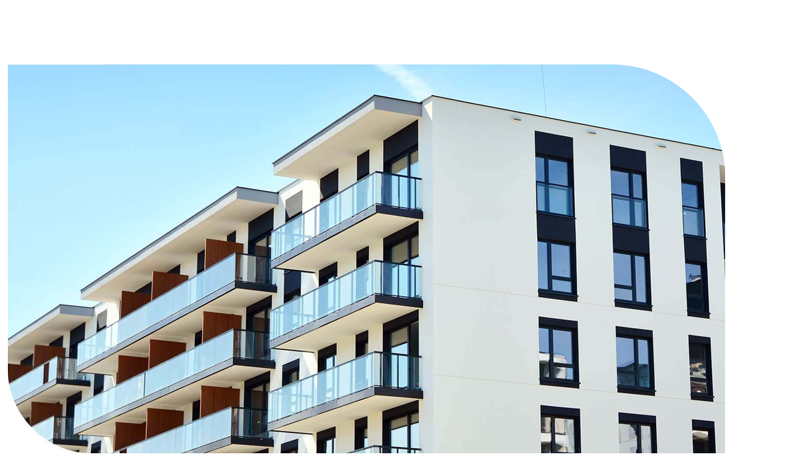
Our intelligent building concept is seen as a dynamic platform that incorporates european technology:
- Building Management Systems
- Predictive Maintenance System
- Power electronic for management of energy flows in buildings
- Internet of Things
- Cloud computing and big data
- Sensors
- Sensors networks
- Distributed, networked and collaborative systems
- Human interaction and usability
- Ambient and active assisted living
- Occupant-focused services and community based applications. The construction of smart communities often faces the problem of diverse equipment and systems, which are difficult to integrate and manage. Our Community solution has the ability to integrate and manage the hardware of mainstream brands in the market through the Internet of Things platform. Through unified equipment and event management capabilities we improve the efficiency of operation and maintenance and solve the problem of isolated islands of devices and systems.
Developing buildings that are self-managed and connected to multiple devices is about yesterday. We’re building spaces that move beyond their walls to connect with smart cities.
Scenarios:
- Connected traffic lights receive data from sensors and cars adjusting light cadence and timing to respond to real-time traffic, reducing road congestion.
- Connected cars can communicate with parking meters and electric vehicle (EV) charging docks and direct drivers to the nearest available spot.
- Smart garbage cans automatically send data to waste management companies and schedule pick-up as needed versus a pre-planned schedule.
- And citizens’ smartphone become their mobile driver’s license and ID card with digital credentials, which speeds and simplifies access to the city and local government services.